This article was first published in Aqua Feed Magazine jan 2026
A return to the sea
We become more and more people on this planet. So, more and more people need to eat good, nutritious food. While food production on land is close to its maximum capacity, the sea still offers significant potential for supplying high-quality protein. To fully realize this potential, we need to reduce our reliance on land-based and synthetic raw materials and instead focus on marine-derived raw materials, ingredients, and feed additives. One of the drivers of this change should be the functional benefits you get from marine proteins.
Aquatic proteins
In the search for more food, sustainability has moved from being a trend to becoming a necessity. The aquafeed industry has responded with impressive innovations in plant-based proteins and circular sourcing. However, it is equally important to look to the sea for the proteins we use in feed. By relying less on plant proteins and allowing those resources to be used more efficiently elsewhere, we can develop greater use of marine proteins. Marine proteins contribute flavor, color, and nutritional quality, particularly for high-end seafood, making them a key component in producing premium products.
By providing marine raw materials to farmed fish, we supply nutrients that are closer to their natural diet. Compared to land-based or synthetic feed ingredients, marine raw materials support more natural feeding behavior and deliver functional benefits, including improved growth, enhanced protein retention, and higher survival rates. These are objective and easily measurable benefits of a more natural aquatic feed.
Fresh functionality
Improved feed composition also supports fish welfare. Fish with better well-being tend to grow more efficiently and perform better overall. Feed with an aquatic flavor profile is more appealing to most species, encouraging consistent feed intake. In addition, marine ingredients naturally provide osmolytes, antioxidants, a complete amino acid profile, and balanced levels of nucleotides. Creating a fish feed that is easy to absorb and impossible to resist.
Together, these factors contribute to better color, improved texture, and superior taste, benefits that matter to fish producers and consumers alike. These are not abstract advantages; they translate directly into product quality at the point of sale. Better-tasting fish improves consumer acceptance, while brighter color and firmer texture strengthen positioning in premium markets. Ultimately, the result is fish that tastes like fish, something end consumers truly value.
A challenge to overcome
Despite the clear potential of marine raw materials, a significant challenge remains. The industry has developed fast and inexpensive solutions based on landderived and synthetic pigments and amino acids. When decisions are driven solely by raw-material costs, these ingredients often appear to be the preferred option.
However, the industry is increasingly starting to look at the bigger picture: environmental impact, the quality of feed and the final product. Decisions must be based on the true value of a product, not only on the lowest possible production cost for something that merely resembles good food.
Even small changes with functional additives can deliver benefits across multiple levels of the value chain. This represents a positive direction for the industry, one that we should support and develop. At every level, we need to make better use of the resources available to us.

Figure 1, Feed Conversion Ratio (FCR) after an 8-week tilapia growout trial. Feed conversion ratio is the amount fed in grams divided by the weight gained; the lower the number, the more efficiently the feed is utilized.
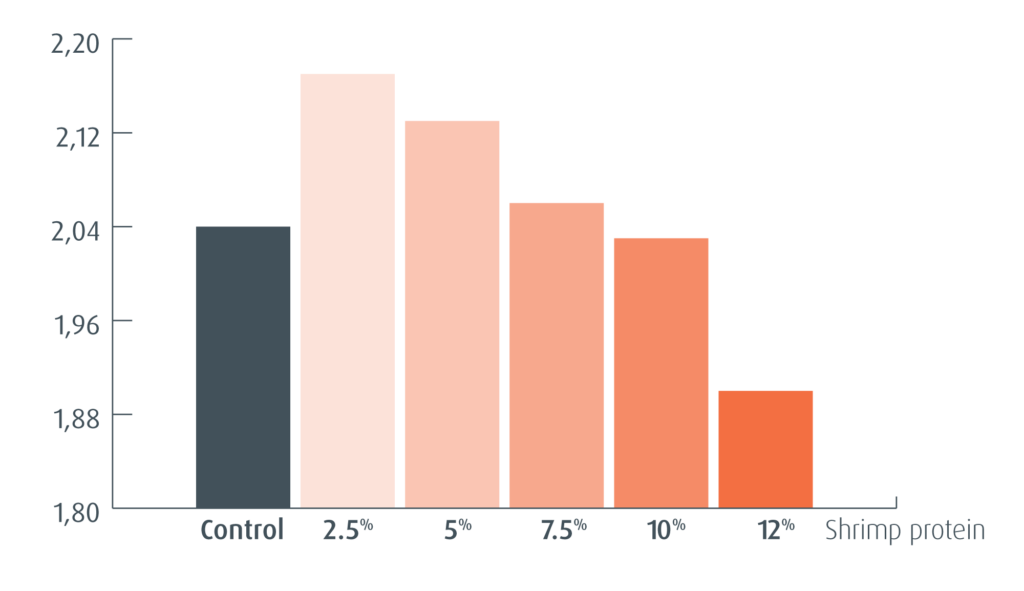
Figure 2, Specific Growth Rate (SGR) after an 8-week tilapia gro w-out trial. Specific Growth Rate is the % weight gain per day from the start to the end of the trial; the higher the number, the better the performance.
Fresh results
Together with the University of Texas A&M, we conducted a study evaluating the use of super-fresh shrimp residuals as a feed ingredient in growth trials. Super fresh shrimp residuals, heads and shells, were processed in a gentle manner and added to tilapia feed. The dose and response were measured (Figures 1, 2). The use of our aquatic shrimp protein boosted tilapia performance.
The product clearly has a beneficial functional and nutritional input. This is a very good example of using aquatic proteins, in this case from shrimp, as an additive in fish feed, specifically tilapia. These results suggest that similar marine proteins would lead to similar results. Providing us with a clear path to take with regard to using more aquatic proteins, with functional benefits, in more of our aquatic feeds, and in turn, being able to create more good food from our oceans.
Looking to the sea to help us produce more and better food from the sea will deliver long-term benefits for producers, consumers, and the environment alike.